Track Mower & Skid Steer Loader Manufacturer

Contact Us
Track Mower & Skid Steer Loader Manufacturer
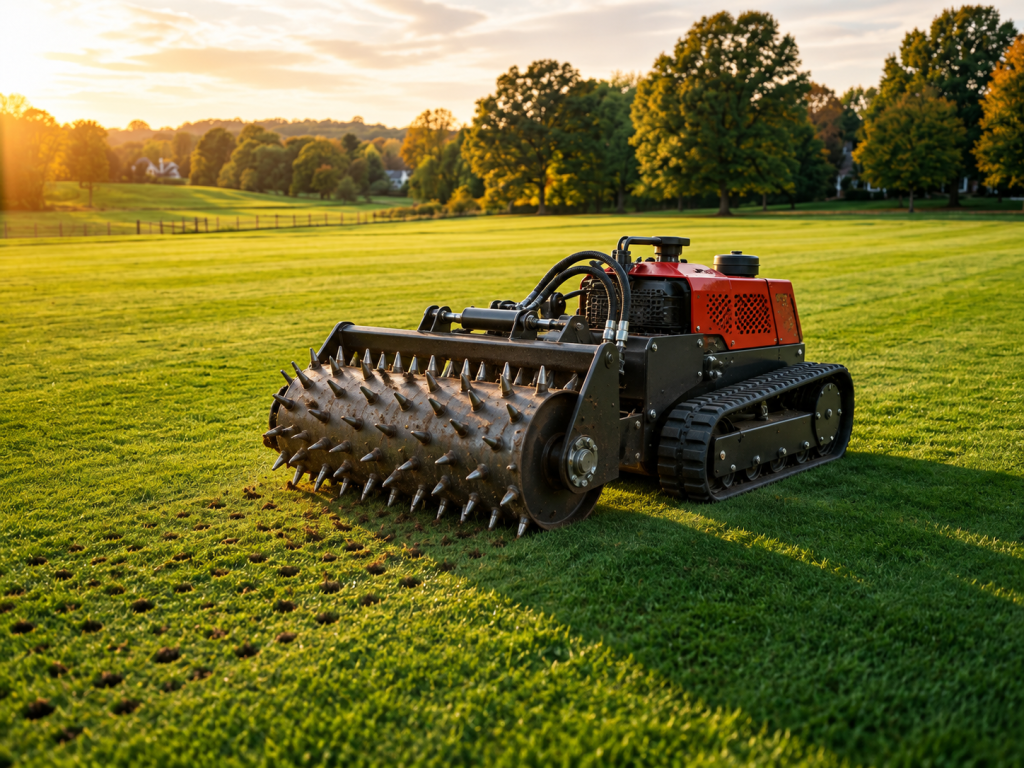
A drum spike aerator is the right call when turf or soil is only mildly to moderately compacted and you need a fast, low-maintenance way to open channels for air, water, and roots — but it’s the wrong call on heavy clay, where solid tines can actually smear and compact the soil further instead of relieving it. Know your soil type first, then pick the tool. Get that order backward and you’ll spend a whole afternoon making your compaction problem worse, not better.
Picture a steel drum studded with solid spikes, usually 2 to 3 inches long, rolling across turf under the weight of the machine pulling or carrying it. As it rotates, each spike punches straight into the ground and pulls back out, leaving a narrow hole behind. No soil is removed — it’s just pushed sideways and compressed slightly around the hole.
That’s the key difference from a core aerator, which physically extracts a plug of soil and leaves it on the surface. Spike aerators are mechanically simpler, cheaper to maintain, and faster to run over large areas. The tradeoff: because nothing is removed, the surrounding soil gets a little denser with every pass. On sandy or loamy ground that barely matters. On dense clay, it can undo the whole point of aerating.
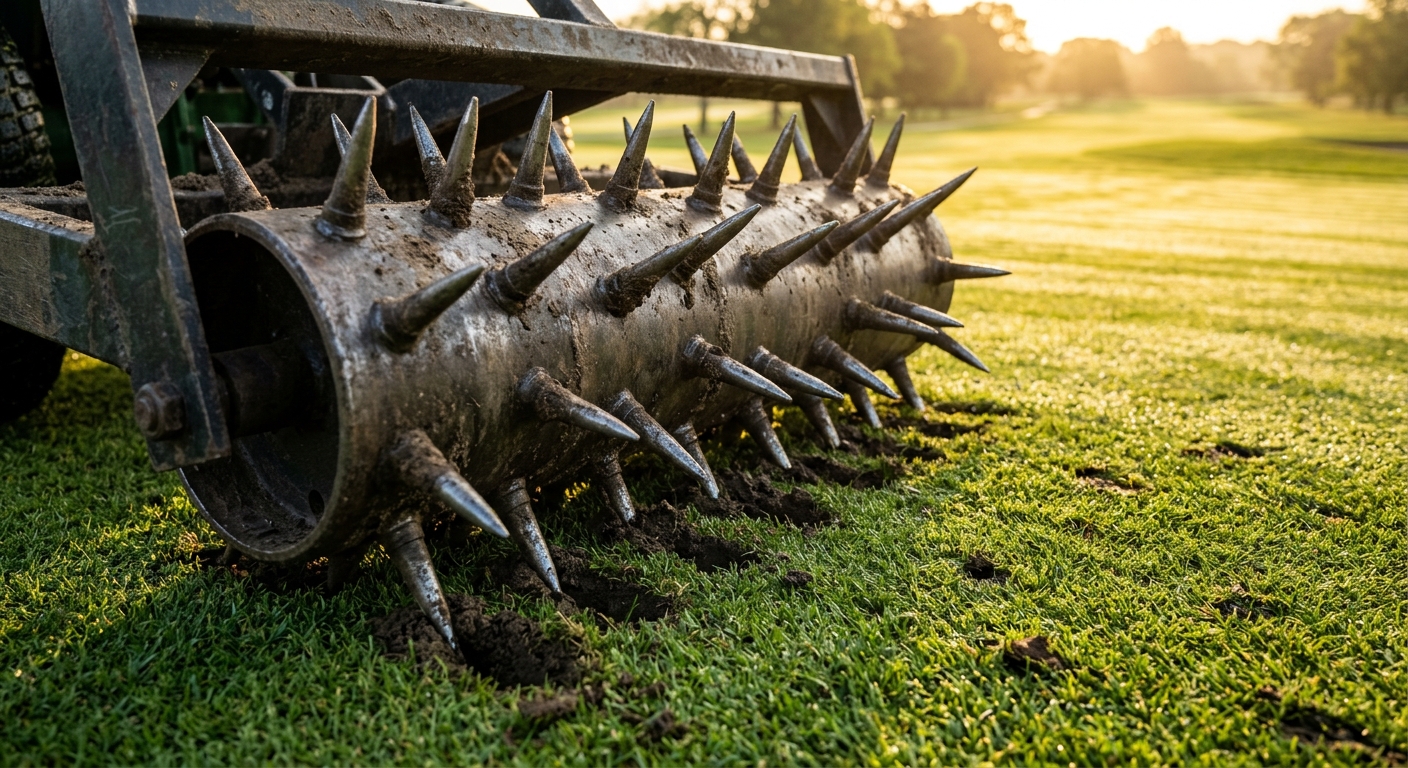
Spike aerators earn their keep on turf that sees regular foot or light equipment traffic but isn’t severely compacted — think parks, HOA common areas, golf course fairways between major renovations, or pasture that’s been lightly grazed. If a soil penetrometer reads under roughly 300 PSI in the top 3 inches, spikes will do the job without the labor-intensive cleanup that core aerating leaves behind.
For example, a property management crew maintaining a 15-acre community park might run a tow-behind spike aerator every six weeks through the growing season — quick, no debris to rake up, and enough to keep water infiltration steady between the twice-a-year core aeration jobs.
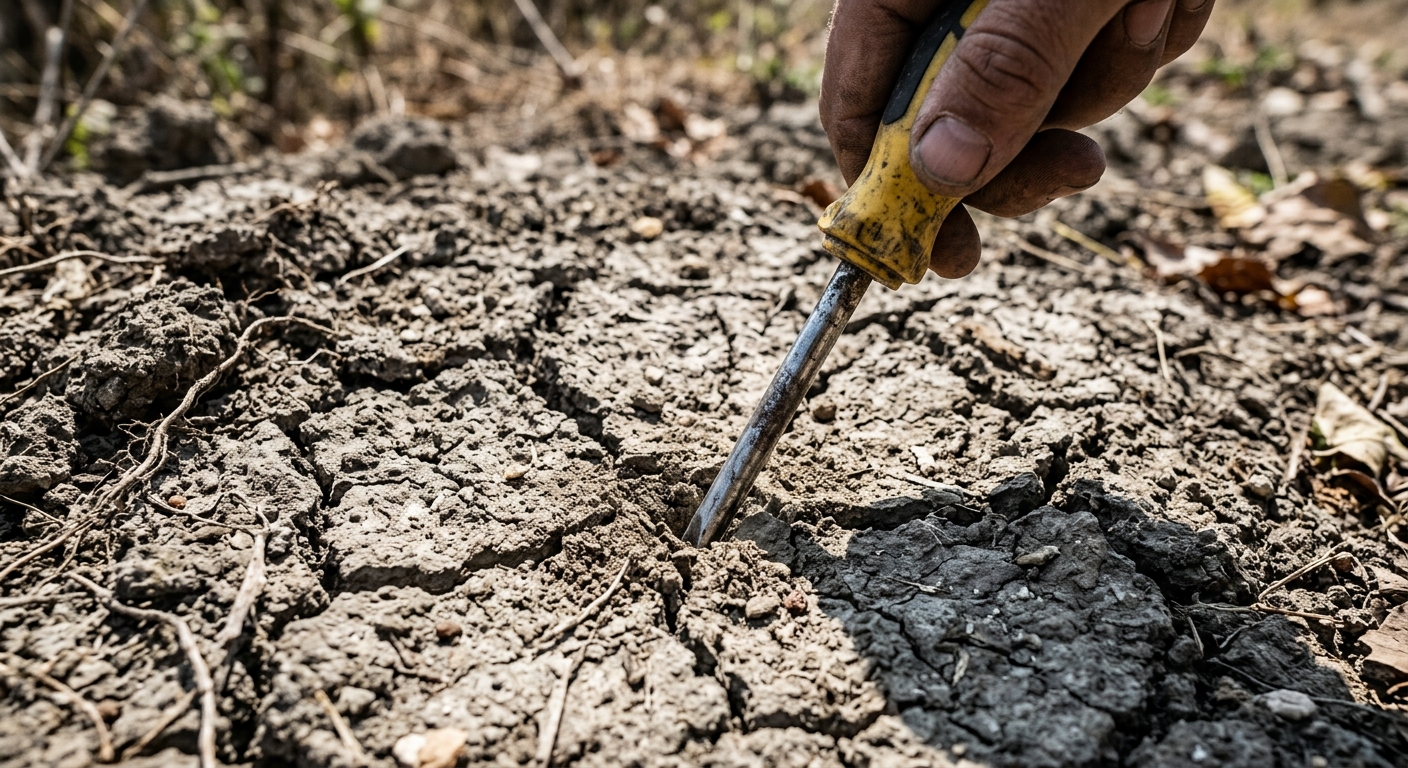
Heavy clay soil with compaction readings above 300–400 PSI is where spike aerators start working against you. Because the tines displace soil rather than remove it, repeated passes on clay create a smearing effect just below the surface — sometimes called a compaction pan — that actually blocks water and root penetration deeper down. If your turf has standing water after rain, thinning grass in high-traffic lanes, or a hardpan you can feel with a screwdriver test at 4 inches, that’s a core aerator job, not a spike job.
Sports fields and athletic turf almost always fall into this category. The traffic load is too concentrated and the soil too dense for spikes to make a meaningful dent. Save the spike drum for the lighter maintenance in between full core aeration cycles.
Run a spike aerator on bone-dry, hard ground and the spikes barely penetrate — you’ll just bounce across the surface. Run it on soaked ground and the tines smear rather than punch clean holes. The sweet spot is soil that’s moist but not muddy, roughly 2–3 days after rain or irrigation, when a boot heel leaves a light impression but doesn’t sink.
Most drum spike aerators run tines at 2–3 inch penetration depth, with spikes spaced 4–6 inches apart on the drum. Deeper isn’t automatically better — go past 3 inches on shallow-rooted turf and you risk tearing roots rather than relieving compaction around them. For tighter spacing (denser hole pattern), slow your travel speed; for faster coverage on large acreage, wider spacing and a quicker pass gets you adequate relief without doubling your time on site.
A rule worth remembering: two passes in opposite directions (a cross-hatch pattern) roughly doubles hole density without doubling depth risk. That’s usually more effective than one slow pass trying to force deeper penetration on hard ground.
Tow-behind spike drums work fine behind a mower or ATV for open turf, but for landscaping and property management crews juggling multiple ground-care tasks, mounting an aerator as an attachment on a compact loader adds flexibility a simple tow drum can’t match. You can adjust down-pressure hydraulically instead of relying purely on drum weight, which matters when you’re moving between sandy patches and firmer clay strips in the same job.
If your crew already runs a mini skid steer for grading, debris handling, or seasonal attachment swaps, adding a spike aerator to the rotation is a low-cost way to extend the machine’s use into turf maintenance season. Our guide on choosing the right mini skid steer loader covers attachment compatibility if you’re weighing whether your current machine can handle it.
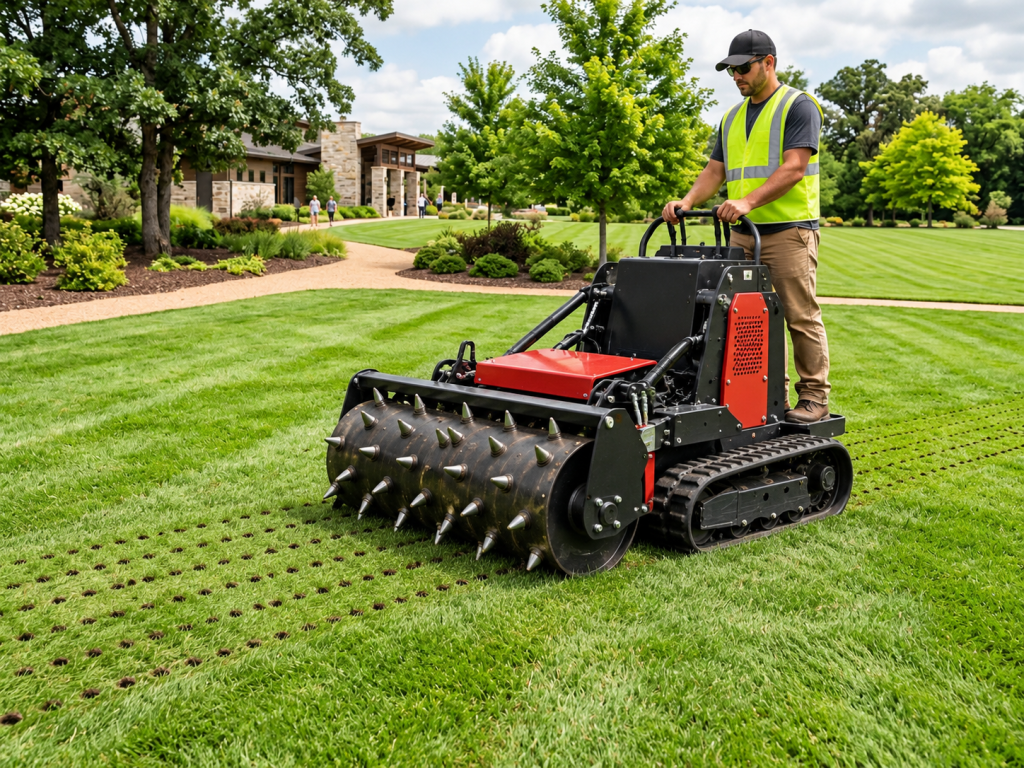
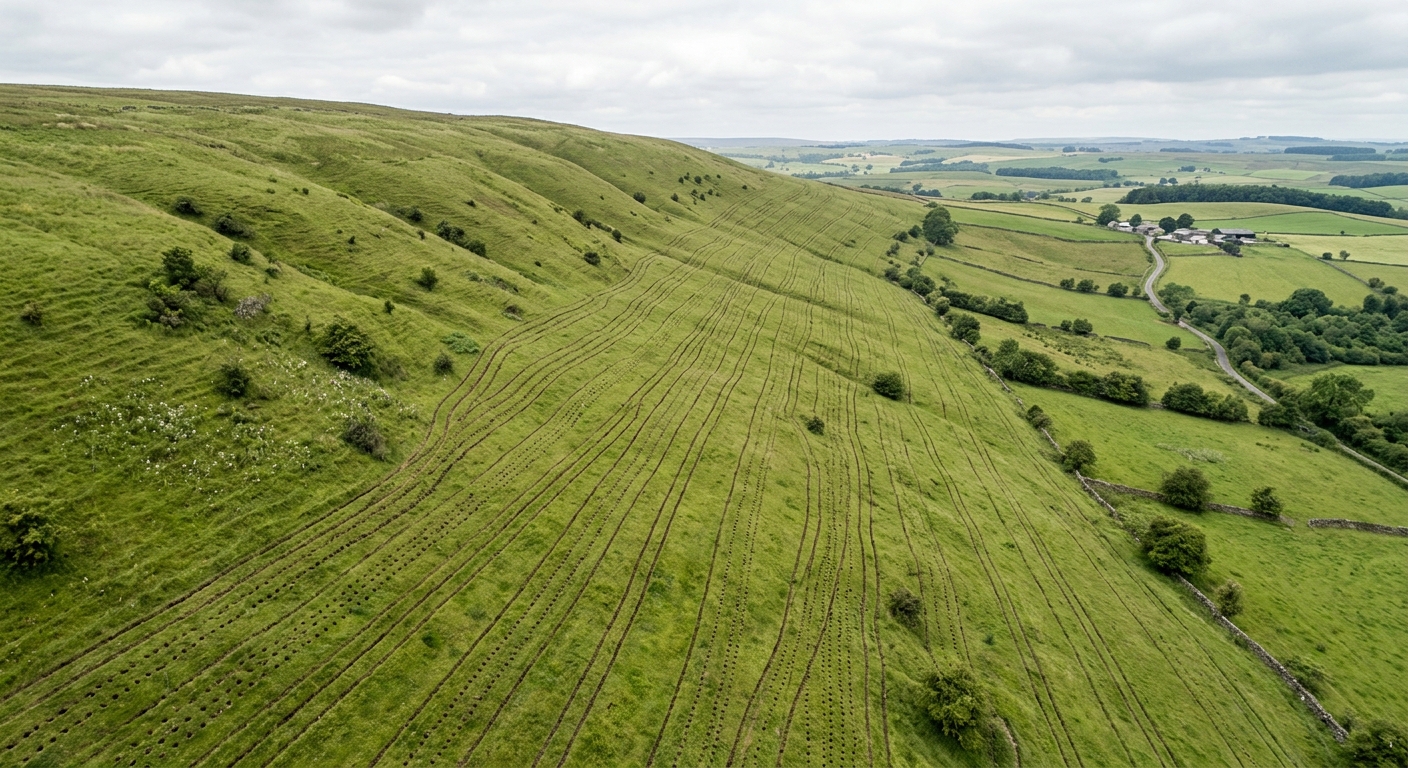
Here’s something crews learn the hard way — running a heavy spike drum on a slope behaves nothing like running it on flat turf. Gravity pulls the drum sideways, tine penetration becomes uneven, and on steeper grades you risk the same operator-safety issues we’ve covered before with slope mowing. If your property has meaningful grade — say anything past 15 degrees — it’s worth considering remote-controlled equipment for the same reasons outlined in our post on slope mowing mistakes remote control mowers eliminate. Aeration on slopes carries the same tipping and traction risks, just less talked about.
Don’t just assume aeration helped — check it. Two weeks after a pass, dig a small 3-inch soil sample near a spike hole and compare resistance to an untouched area nearby. You should feel noticeably less resistance, and water from a hose should soak in within 30–60 seconds instead of pooling. If it’s still pooling, the spikes weren’t deep enough, the soil was too dry when you ran the pass, or — more likely on clay — you needed core aeration instead. Track results over a season, not after one pass; compaction relief is cumulative.
 Guides
 Guides
 Guides
 Guides
 Guides
 Guides