Track Mower & Skid Steer Loader Manufacturer

Contact Us
Track Mower & Skid Steer Loader Manufacturer
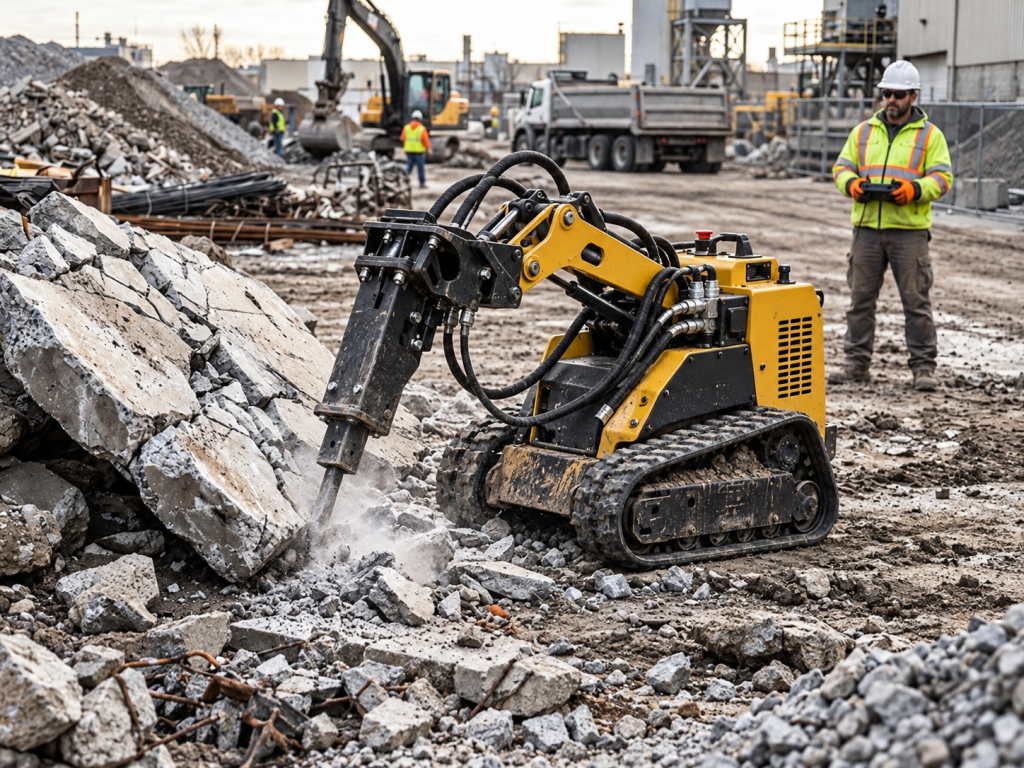
A hydraulic breaker will only work correctly on a mini skid steer if three numbers line up: the carrier’s auxiliary flow rate (GPM), its relief pressure (PSI), and the machine’s operating weight relative to the breaker’s mass. Get any one of those wrong and you’ll either stall the breaker, blow seals, or bounce the carrier off the ground with every strike. Most compatibility problems aren’t about brand — they’re about mismatched hydraulics that nobody checked before the attachment shipped.
Here’s a common misconception: buyers assume more pressure equals harder hits. Wrong. Pressure determines force per strike, but flow rate (measured in GPM or LPM) determines how fast the breaker cycles — how many blows per minute you actually get.
A mini skid steer running 8 GPM through a breaker rated for 12 GPM won’t hit harder, it’ll just hit slower. You’ll be standing there wondering why the breaker feels sluggish on concrete that should crack in seconds. Undersized flow is the single biggest reason breakers get returned as “defective” when the real issue is the carrier.
Check your machine’s auxiliary hydraulic spec sheet before shopping for attachments. If you’re still deciding on a carrier, our guide on choosing the right mini skid steer loader covers auxiliary flow ratings by class.
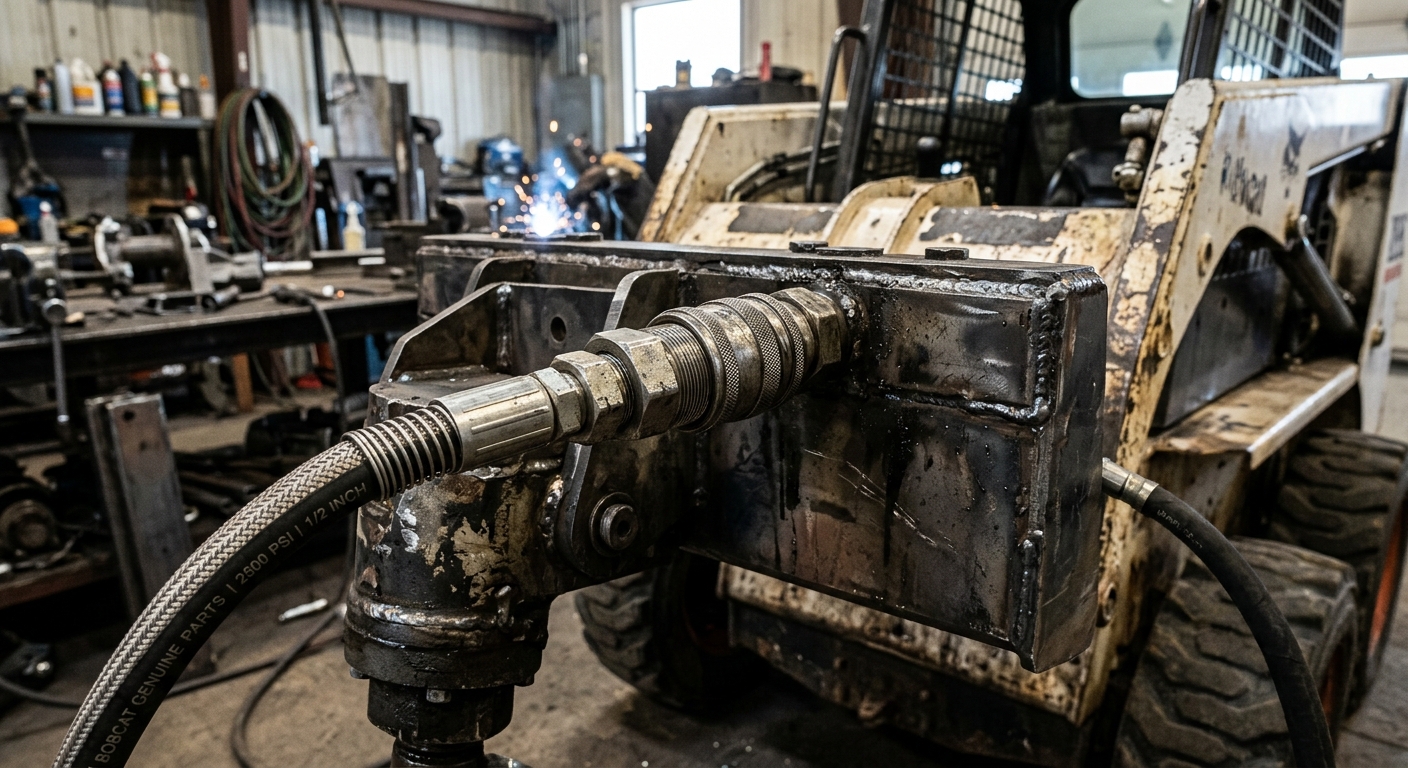
Pressure that’s too low starves the breaker’s piston — you’ll notice weak, inconsistent strikes. Pressure that’s too high is worse: it stresses seals, accumulator diaphragms, and the tool bushing well beyond design limits, and you often won’t see the damage until a seal blows mid-job.
Every carrier has a relief valve capping system pressure. A breaker rated for 2,800 PSI max doesn’t mean your carrier should run at 2,800 PSI constantly — that’s the ceiling, not the target operating range. Most manufacturers recommend running 10–15% below rated max for sustained duty cycles like trenching or demolition.
If your mini skid steer’s relief valve is adjustable, have it set to match the breaker’s mid-range spec, not its maximum tolerance.
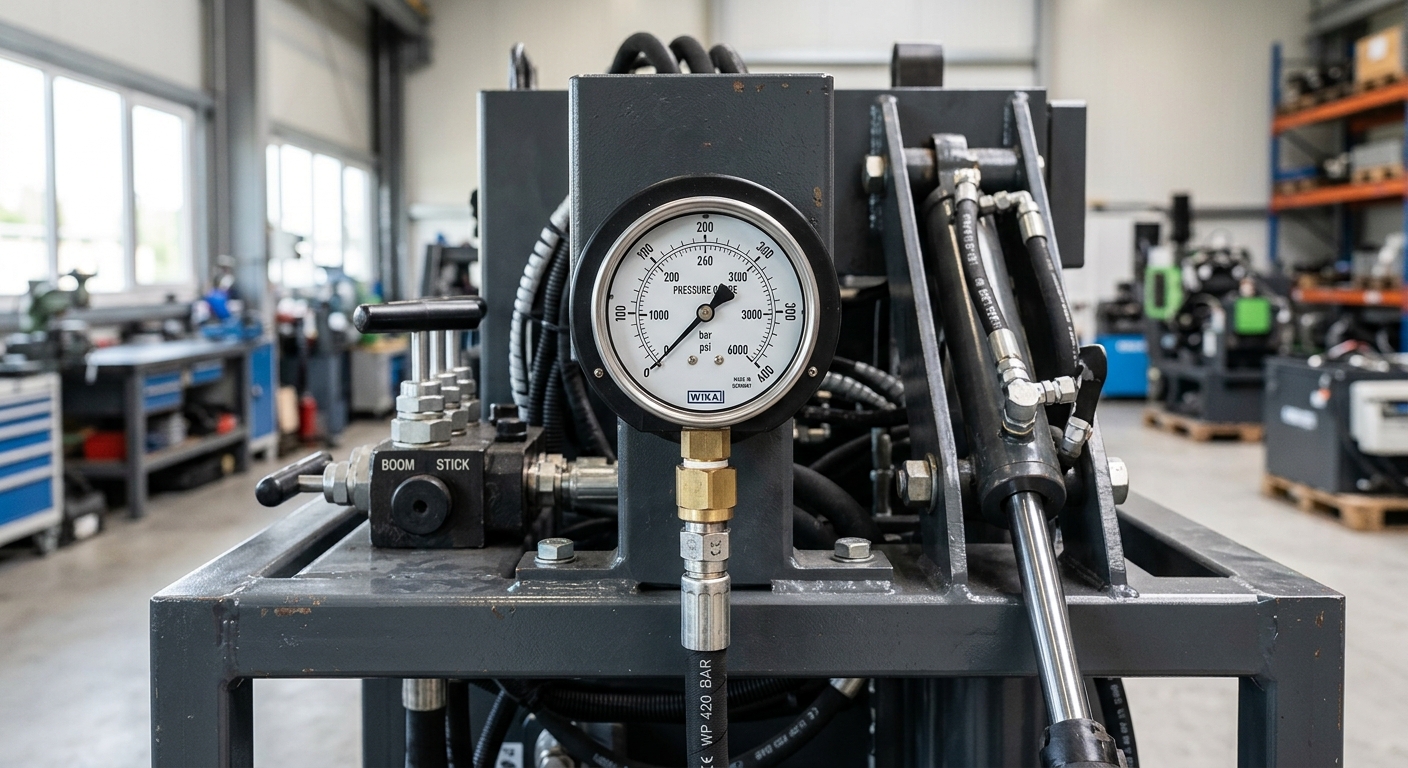
A rough but reliable rule: the breaker’s operating weight should sit between 6–10% of the carrier’s operating weight. Go heavier and the carrier struggles to hold the tool against the surface — you’ll see the machine rock or lift on impact instead of transferring force downward.
For example, a 3,200 lb mini skid steer pairs well with a breaker in the 200–320 lb range. Push that same carrier toward a 400 lb breaker and you’re asking a light machine to anchor a tool it can’t fully stabilize — productivity drops and undercarriage stress climbs.
This is exactly why our most popular skid steer choices by use case breakdown separates machines by weight class first — attachment compatibility follows from there, not the other way around.
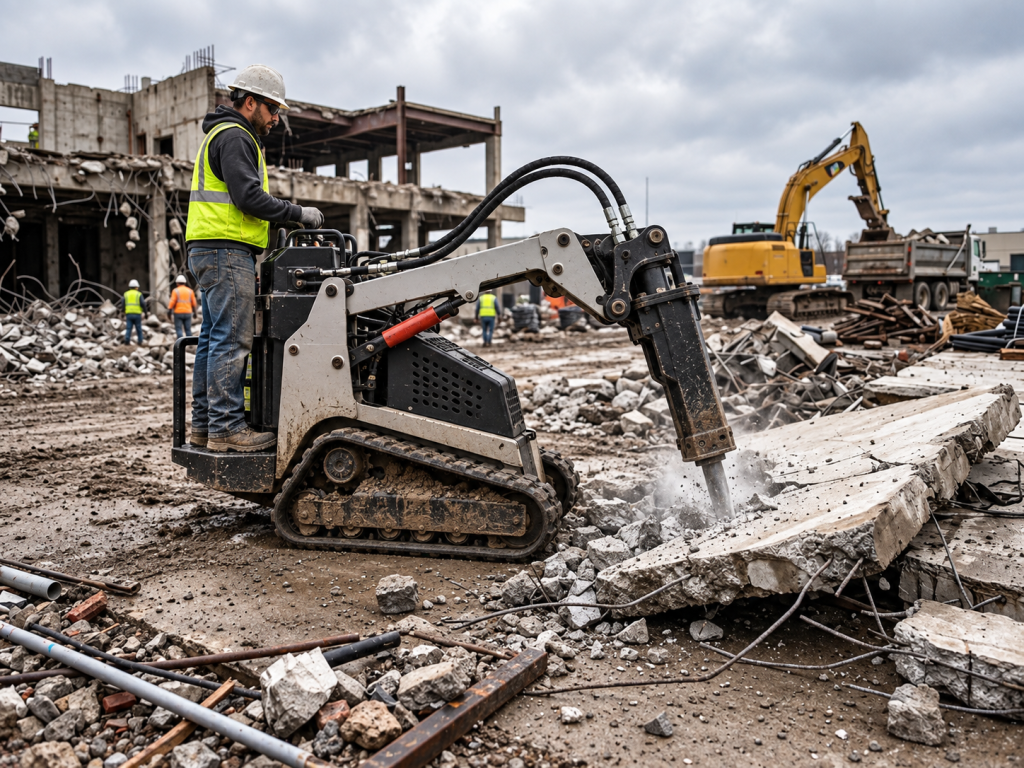
Breakers only need one-directional hydraulic flow — unlike augers or grapples that need bidirectional flow for reverse function. If your mini skid steer’s auxiliary circuit only supports two-way flow with no dedicated one-way breaker mode, you’ll need a flow diverter or the breaker simply won’t fire correctly.
Check whether your carrier has a foot-pedal or thumb-switch dedicated breaker circuit. Many entry-level mini skid steers skip this and rely on the same auxiliary lines used for buckets and grapples — workable, but you’ll want to confirm the case drain line is routed properly, or the breaker’s back pressure can climb and shorten seal life.
Flow and pressure aside, the breaker still has to physically bolt on. Universal skid steer mounting plates are common, but bracket geometry, pin spacing, and hose routing length vary enough between manufacturers that a “universal fit” sometimes still needs an adapter plate.
Quick-attach couplers rated for higher flow than your breaker actually uses will introduce unnecessary pressure drop across the fittings — small, but measurable over a full shift of continuous breaking.
A landscaping contractor recently needed to remove old concrete footings across a residential job — tight backyard access, no room for a full-size excavator. They paired a 3,500 lb mini skid steer with a 280 lb breaker rated at 11 GPM and 2,600 PSI. The carrier’s auxiliary circuit delivered 10.5 GPM at 2,550 PSI — close enough to spec that the breaker cycled at near-full frequency without straining the machine’s stability.
Compare that to a mismatched setup: the same contractor initially tried a heavier 340 lb breaker rated for 14 GPM on the same carrier. The machine couldn’t sustain flow, strikes slowed by nearly 30%, and the front end bounced on harder concrete sections. Swapping down to the correctly sized breaker fixed both issues in one trip back to the yard.
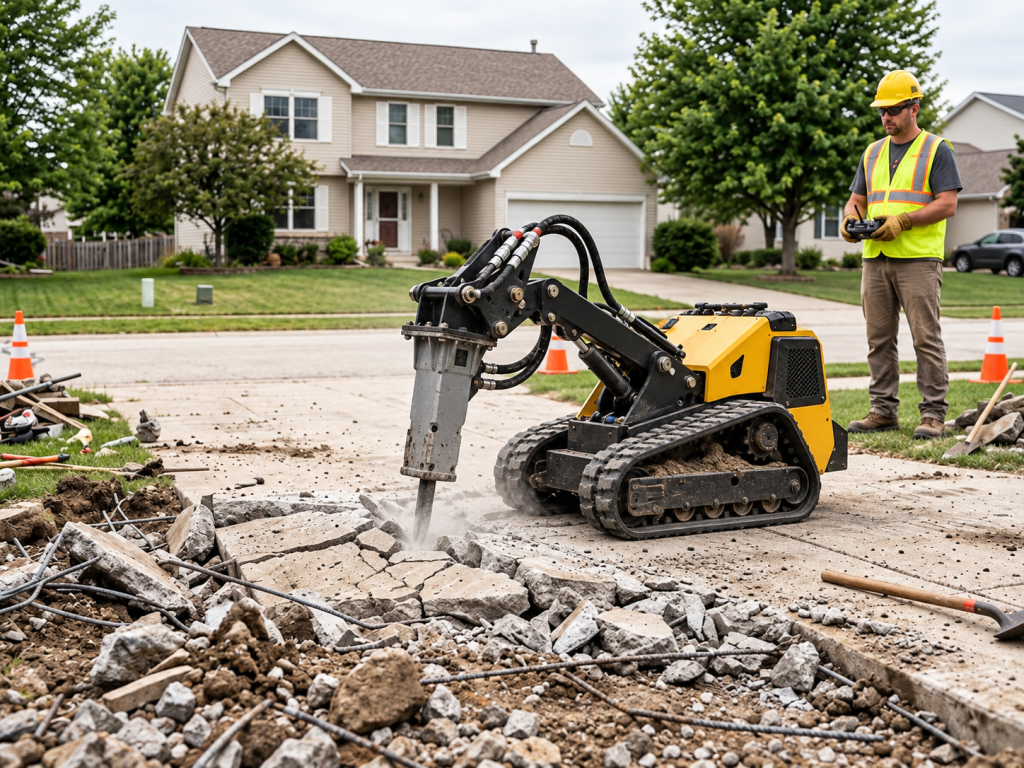
None of these show up on a spec sheet comparison alone. They show up in the field, which is why matching flow and pressure ranges before purchase saves far more time than troubleshooting after.
 Guides
 Guides
 Guides
 Guides
 Guides
 Guides