Track Mower & Skid Steer Loader Manufacturer

Contact Us
Track Mower & Skid Steer Loader Manufacturer
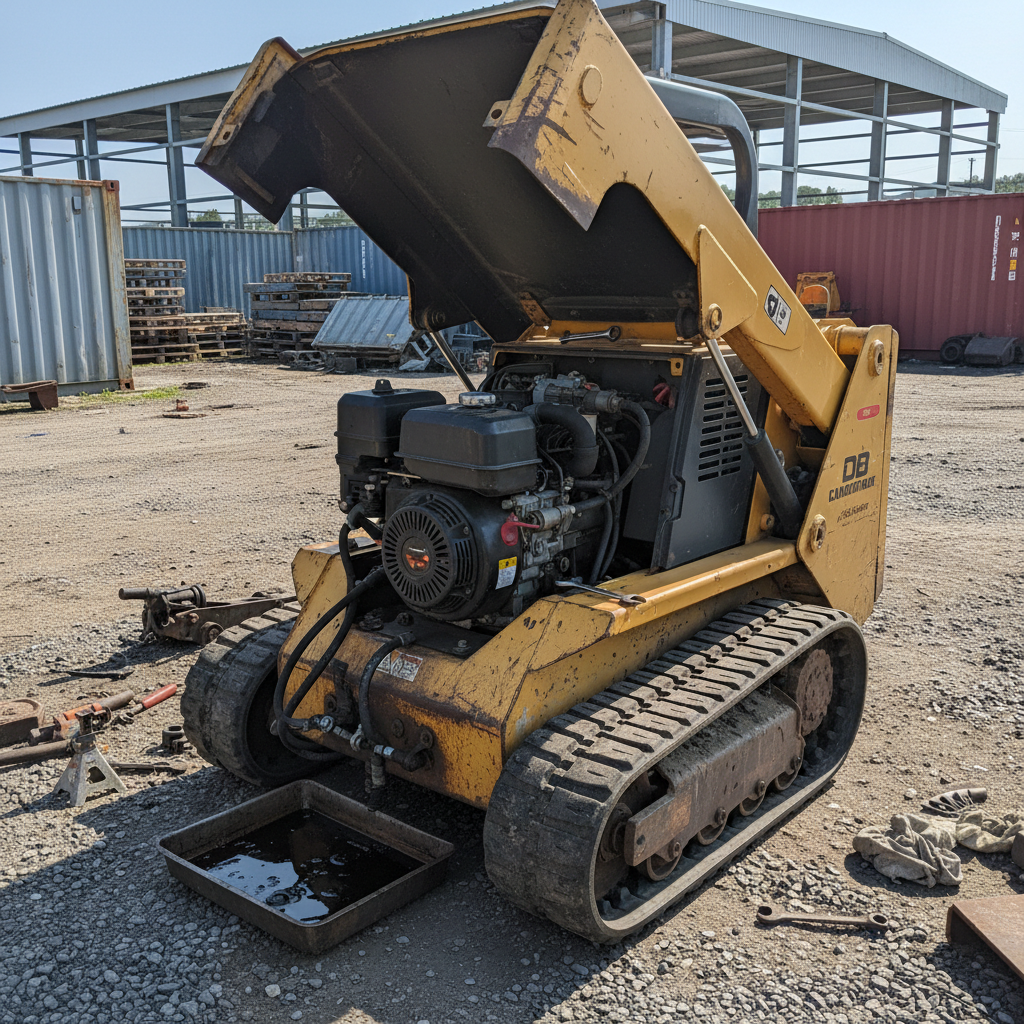
Skid steer maintenance on a mini, stand-on machine runs in three rhythms. Walk around the machine every shift (fluids, leaks, tracks or tires, coupler, cooling, platform). Do greasing and filter work by hour interval. Inspect the whole machine once a year. Your operator's manual overrides any generic schedule, and you service on whichever comes first, hours or calendar.
The hour marks follow the pattern in published OEM service guides for skid steers. They are not Anqun-specified intervals, so treat this as a skid steer maintenance checklist template and swap in the figures from your own manual.
| Interval | Key checks | What it prevents |
|---|---|---|
| Daily / each shift | Engine oil, hydraulic fluid and coolant levels; fuel/water separator; leaks and hoses; track sag or tire condition; coupler and attachment; cooler debris; platform and controls; high-use grease points | In-field breakdowns, overheating, dropped attachments |
| ~50 hours or monthly | Remaining grease points; close hose inspection; measured track tension; battery terminals; fasteners; air filter | Seized pins, hose bursts, hard starts |
| ~250 hours | Engine oil and filter; fuel filter | Engine wear, clogged fuel system |
| ~500 hours | Hydraulic fluid and filter; belts; electrical | Pump wear, overheating, drive slip |
| Annual / seasonal | Frame welds, cylinders, pin wear, tracks or tires, fluid condition, battery | Cracks, cylinder drift, surprise failures |
Lower the arms and shut the machine off before inspecting, and follow the manual's safe-service procedures.
Check engine oil, coolant and hydraulic fluid against the min/max marks. Top up hydraulic oil only with the ISO viscosity grade (the "VG" number) the manual specifies, because the wrong grade thins or thickens at working temperature. Drain the fuel/water separator if it shows water. Milky oil points to coolant contamination: stop and investigate. Look under the machine for drips and for loose or chafed hoses.
On tracked units, measure sag in millimetres with a straightedge at the point the manual names, compare it with the manual's range and write the number down. Too tight loads sprockets, rollers and bearings. Too loose risks de-tracking. Clear packed mud and stones from the undercarriage. On wheeled units, check for tire damage, pressure and lug nut tightness. Cracked rubber or missing lugs raise a replacement question, and Skid Steer Track Lifespan: How Long Do They Last? sets out the wear signs and timing.
Confirm the latch or pins are fully seated and the coupler faces are clean and undamaged. Check that no fitting is weeping. Debris between attachment and plate causes loose fits that wear the lift arms, and a mini machine that swaps tools often meets this problem every shift.
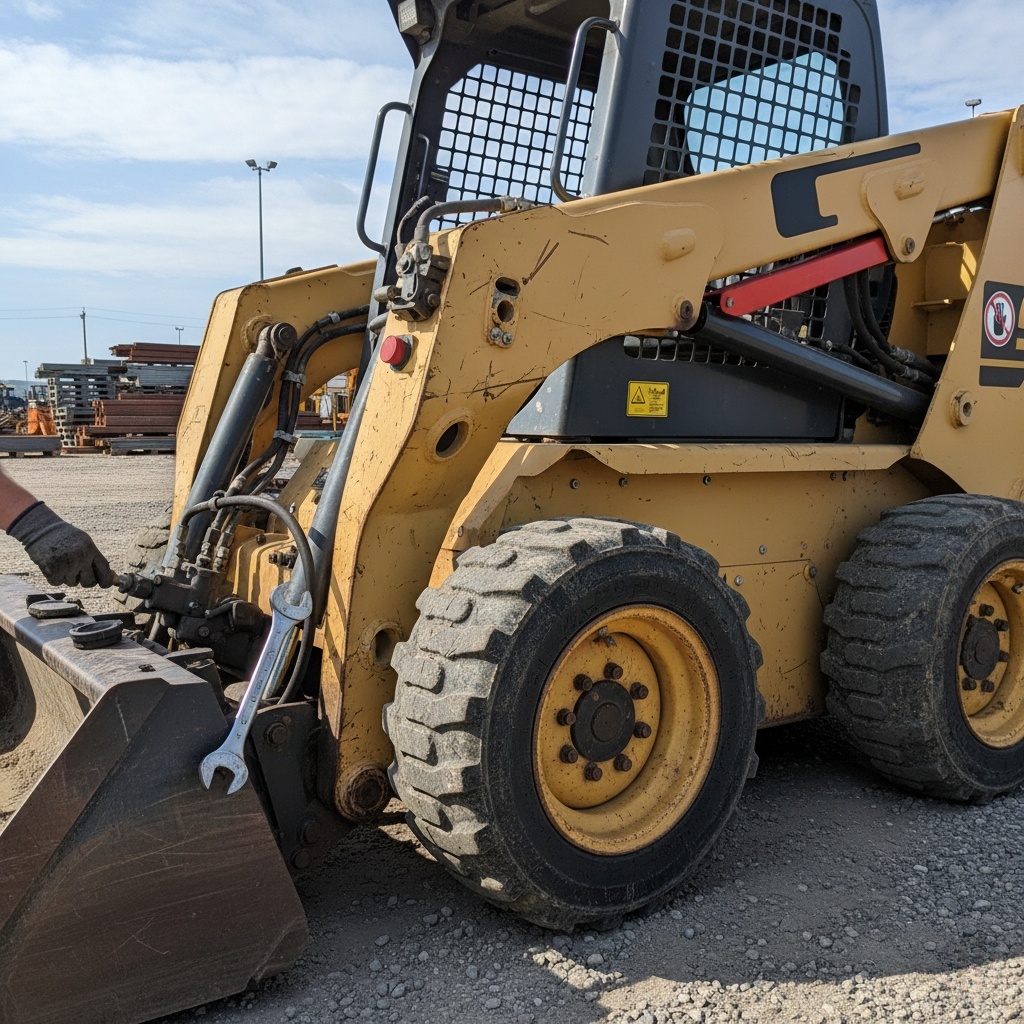
Clear the radiator, oil cooler and grill area. Dust, dry vegetation and leaf litter block them fastest, and a blocked cooler leads straight to overheating.
Wipe mud and oil off the platform so your footing is secure. Check the platform mounts and fasteners for cracks or looseness. Confirm the handles and control levers move freely and return to neutral. Test any operator-presence or stop controls fitted to your machine as the manual describes before you load an attachment.
Stock the filter types your manual lists. Typically that means the engine oil filter, fuel filter, fuel/water separator element, air filter element (plus an inner safety element if fitted), hydraulic return filter and, if fitted, a case drain filter or tank breather. Log the date, hour-meter reading and work done each time. A log beats memory, and a documented history helps resale.
Service cost depends on your local labour rate and your machine's parts, so the table below shows who usually does the work and what drives the bill at each interval.
| Interval | Typically DIY | Typically shop | What drives the bill |
|---|---|---|---|
| Daily / 50 hours | Yes: checks, grease, air filter | Rarely | Grease and consumables only |
| 250 hours | Yes, if you have a drain pan and the right filters | Optional | Oil volume, filter parts, disposal |
| 500 hours | Possible | Often | Hydraulic fluid volume, filters, labour time |
| Annual | Partial | Often, for a second inspection of welds and cylinders | Findings: worn pins, seals or tracks |
Mini skid steer cost explains what to budget for ownership. For a parts list before you budget, contact us.
Dust, mud, vegetation and wet jobs call for shorter intervals: wash down daily, clean the coolers every shift and check the air filter more often. Salt or snow work calls for a daily undercarriage rinse to limit corrosion. In cold weather, check the battery and fluids more often. Steep-slope mowing runs on a separate remote control machine, and the limits are laid out in What Slopes Can Remote Control Track Mowers Handle and Track Mower vs Zero-Turn on Slopes.
Attachments take the hydraulic shock, so give them the same routine: grease pivots, check cutting edges, teeth or bristles, inspect hoses and couplers for abrasion, wipe and cap couplers when the tool is off the machine, and store it off the ground. Quick points by tool:
How to Choose Mini Skid Steer Attachments for Different Jobs matches tools to work.
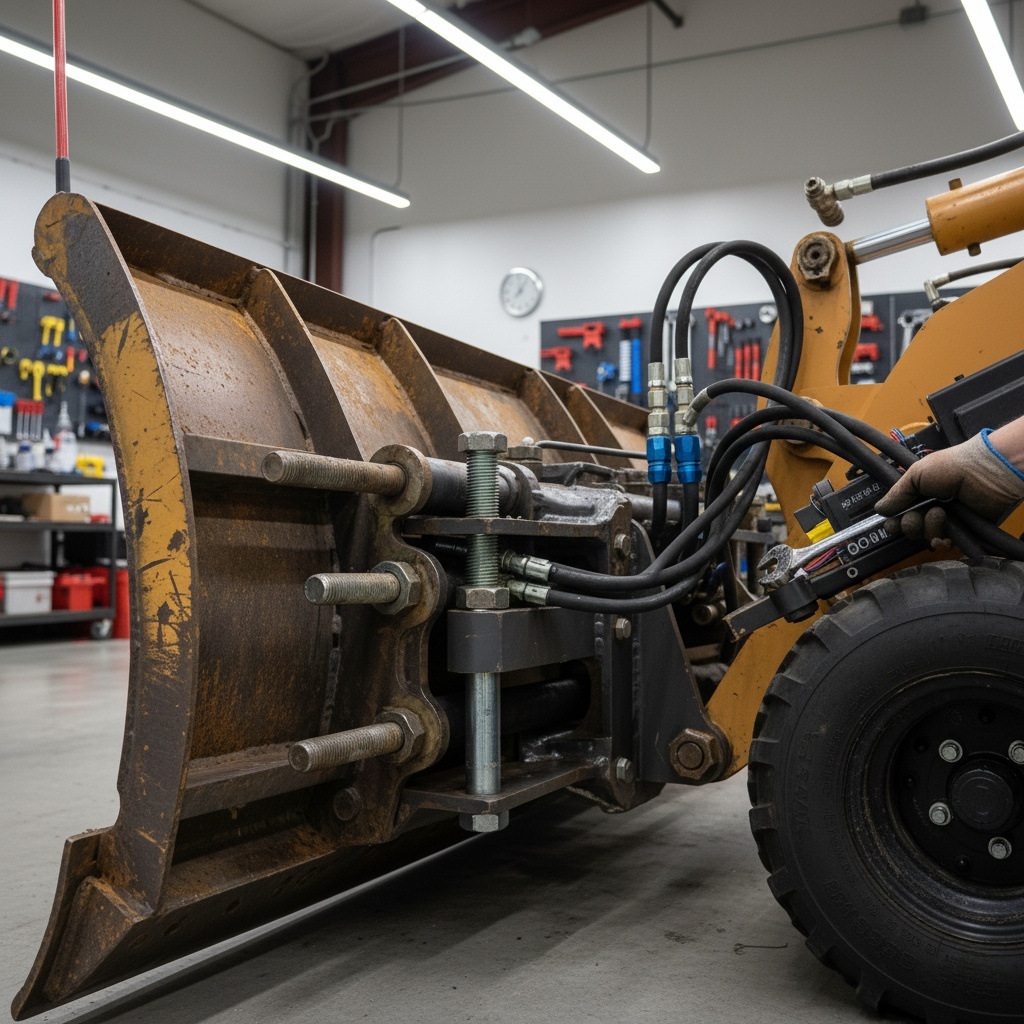
Park on level ground, lower the arms and shut down. Then check, and call for service if the cause isn't obvious.
Ask any supplier three things. Are parts easy to get? Is documentation provided? Can someone help when something fails? Anqun supplies operation manuals and parts lists on request, plus remote service support. Spare parts include rubber tracks, hydraulic components, tires and attachments, and one common hydraulic coupler system runs across the stand-on range. The tracked PSH100 loader shows what a compact stand-on machine looks like.
To pick a machine, read How to Choose a Mini Skid Steer for Landscaping and Tracked vs Wheeled Mini Skid Steer for Landscaping. To compare models and their service documentation, request a quote.
How tight should skid steer tracks be?
Tension is a measured sag, not a feel. Use a straightedge across the track between the roller and idler, read the gap in millimetres, and compare it with your manual's range. Check visually daily and measure around every 50 hours, and again after muddy or clay work, since packed debris changes tension.
How often should you grease a skid steer?
On the typical OEM pattern, grease high-use pivots, lift arms and the coupler every shift or roughly every 8–10 hours. Grease the remaining fittings around every 50 hours. Increase the frequency in mud, water or dust, wipe each fitting first, and use the grease type your manual names.
How often should you change skid steer hydraulic oil?
The usual pattern is to inspect hydraulic fluid and filter around 500 hours and change it by hour or calendar interval, whichever comes first. Change early if it turns dark, milky or smells burnt. Use the ISO viscosity grade your manual specifies, and replace the hydraulic filter with the fluid.
How often are you supposed to service a skid steer?
Check the machine every shift. Grease and inspect hoses, tension and filters around every 50 hours. Change fluids and filters around 250 and 500 hours, and inspect everything annually. The hour marks come from typical OEM patterns, so follow your manual and use whichever comes first, hours or calendar.
What is the 70/30 rule for a skid steer?
No formal industry standard by that name can be verified. It is usually quoted as a rule of thumb about load or weight distribution, and definitions vary. The dependable figure is the rated operating capacity in your operator's manual, so work to that.
What skid steers should you stay away from?
Judge by criteria, not brand. Avoid machines with no parts availability, no manuals or service documentation, and no reachable support. On used units, avoid ones whose service history you cannot verify, or that show hydraulic leaks and heavily worn tracks or tires.
How much do people charge per hour for a skid steer?
That is a rental rate. It varies by region, machine size and attachment, so local quotes are the only reliable answer. Mini skid steer cost covers the ownership side.
 Guides
 Guides
 Guides
 Guides
 Guides
 Guides