Track Mower & Skid Steer Loader Manufacturer

Contact Us
Track Mower & Skid Steer Loader Manufacturer
A stand-on mini skid steer costs less than a cab-equipped compact loader, and a wheeled unit costs less than a tracked one of the same size. Attachments, freight and wear parts then add to the total.
Mini skid steer cost is set by machine class, tracked or wheeled drive, rated load and everything you buy after the machine itself. Price depends on your configuration and destination, so the useful number is the landed, equipped cost, not the sticker price.
A stand-on skid steer is a cabless loader. The operator rides on a rear platform, and the footprint suits tight access, orchards and light landscaping. Machines in the 300 kg rated-load class weigh roughly 890–950 kg. The 43 in (1090 mm) wide tracked models are among the narrowest in the category.
Small size and no cab keep the entry cost below a conventional compact loader. The classes compare like this:
| Machine class | Price position | What mainly drives it |
|---|---|---|
| Stand-on tracked mini loader | Entry to mid; above a wheeled unit of similar size | Undercarriage, engine option, hydraulics |
| Stand-on wheeled mini loader | Lowest of the three at similar size | Tires, simpler drivetrain |
| Seated, cab-equipped compact loader | Highest of the classes here | Frame size, rated load, cab and ROPS, larger engine |
| Used or rental | Varies widely | Hours, track or tire condition, parts availability |
Specs and configurations for stand-on mini skid steer loaders show how these factors combine into one machine.
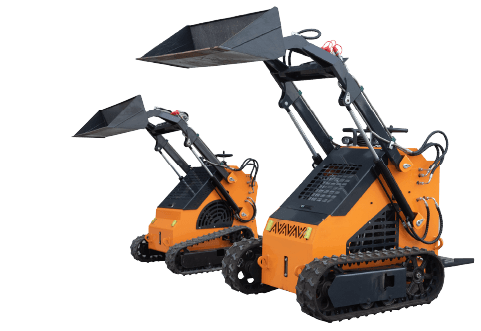
At the same size class, a wheeled stand-on loader costs less than a tracked one. The undercarriage is simpler, and tires cost less to replace than rubber tracks.
The trade-off shows up in ownership cost. Tires give less traction and put more ground pressure on the surface. On soft turf or slopes, that can mean surface repair, lost working days or a job the machine can't do. The case for how tracks cut ground pressure on turf decides whether the cheaper wheeled unit is the cheaper choice overall.
Conventional compact skid steers and compact track loaders cost more than stand-on minis. They have bigger frames, higher rated loads, enclosed operator cabs and larger engines. Buyers who only need tight-access work can end up paying for capacity they never use.
A stand-on mini can handle tight access, orchards, slopes and light landscaping at a lower entry cost. It does not match a larger loader on lifting capacity, and a job that needs heavier loads needs the bigger machine. A larger loader lifts more but costs more to buy and run.
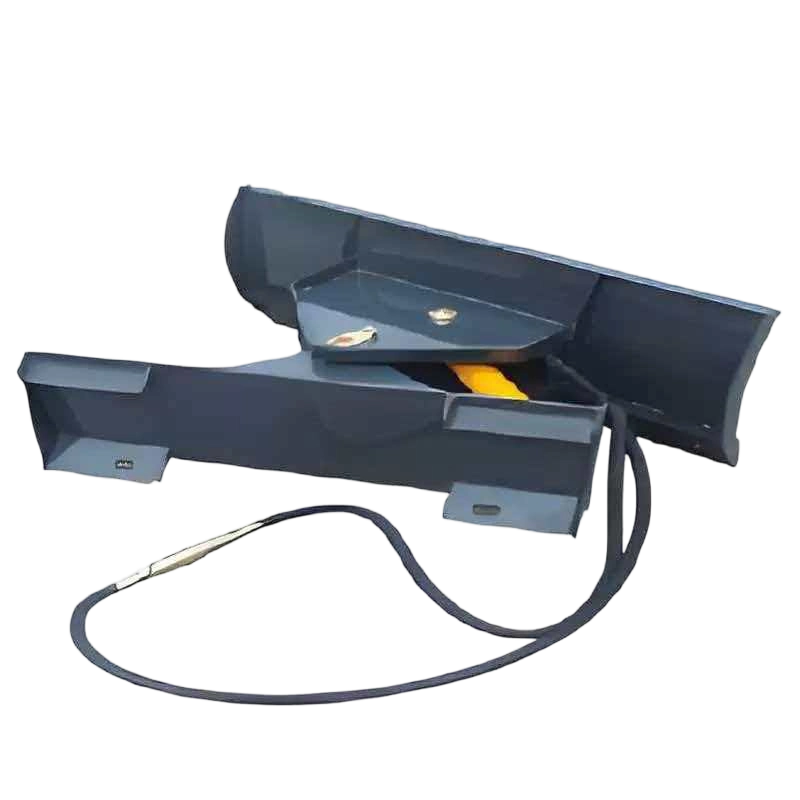
Most jobs need at least one attachment beyond the bucket. A snow plow with hydraulic angle control needs an auxiliary hydraulic circuit, while a fixed blade does not. A snow blower runs at 16 MPa and works best at 11–20 GPM (40–75 L/min), and a hydraulic breaker works at 9–12 MPa. Attachment hydraulics must match your loader's flow and pressure, or you pay for a unit your machine can't run.
Shipping, duties and documentation vary by destination, and lead times and shipping methods vary by model, configuration and destination. Freight is usually charged on shipping weight, so confirm which weight applies. A listed weight such as 890 kg versus 950 kg can differ by configuration. Compare quotes on landed cost, not machine price alone.
Rubber tracks, hydraulic components, tires and filters are the recurring items. Daily and monthly checks keep wear costs predictable. Rubber tracks are the main wear item, so budget for their replacement.
Digging, trenching and site cleanup suit a mini loader well. Trenching and breaking work on construction sites shows which attachments to price alongside the machine.
A quote is only as good as the brief behind it. Send:
Anqun Machinery builds stand-on, cabless mini loaders in tracked (THS100, PSH100) and wheeled (WSH100) versions. It has no seated or full-size machines. The THS100, WSH100 and PSH100 are listed as EPA & Euro 5 compliant, and CE-ready configurations come with documentation support. The WSH100 is listed at 890 kg / 950 kg, and the PSH100 at 890 kg (1,960 lb). Confirm which of the two weights your quote and freight are based on. Anqun supplies rubber tracks, hydraulic components, tires and attachments, and supports OEM/ODM supply for distributors and fleet buyers.
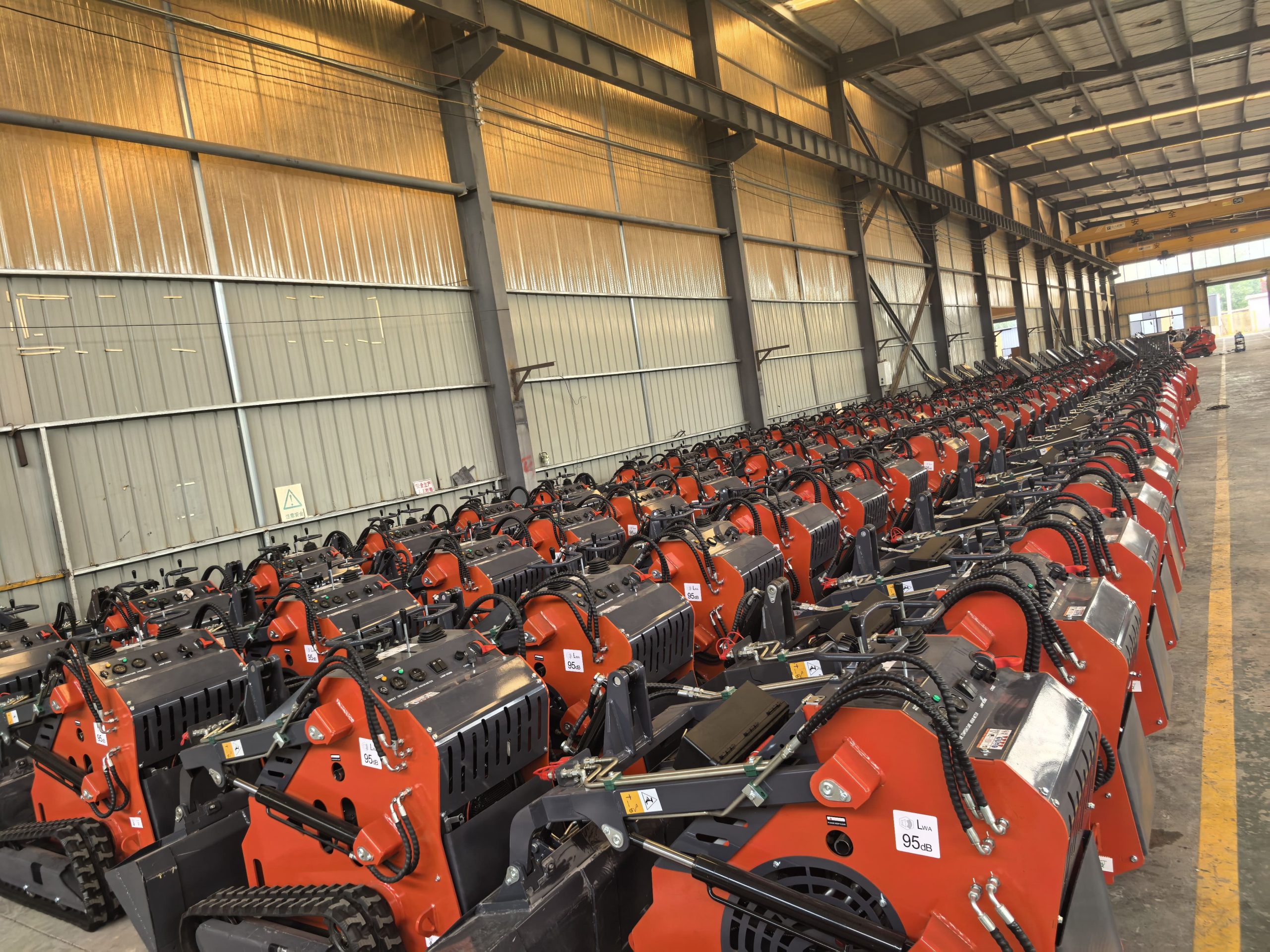
Anqun supplies factory-direct from its 14,000 m² Xuzhou factory to 2,000+ clients. Request a quote with the details above and you'll get a price for your configuration. You can also browse the compact construction equipment range first.
How much does a stand-on skid steer cost?
A stand-on loader in the 300 kg rated-load class costs less than a cab-equipped compact loader. Drive type, engine, hydraulics, emissions spec and condition set the machine price. Attachments, freight and wear parts add to it, so ask for a landed, equipped quote.
What is the wheeled skid steer price?
A wheeled stand-on loader in the roughly 890–950 kg class costs less than a tracked one of the same size. Its undercarriage is simpler and tires cost less than rubber tracks. The saving shrinks on soft ground or slopes, where weaker traction raises repair and downtime costs.
What is the compact skid loader price?
A seated compact loader costs more than a 300 kg-class stand-on mini. It has a bigger frame, higher rated load, enclosed cab and larger engine. It suits heavy lifting. A stand-on mini covers tight access and lighter work at a lower entry cost.
What should I send to get an accurate quote?
Five items: the loader model, the attachment with its working width and mount plate type, hydraulic flow, your shipping destination and a photo of the front mounting plate. With those, the supplier can check attachment fit and price the full configuration, freight included.
 Guides
 Guides
 Guides
 Guides
 Guides
 Guides